
- Home
- Editor's Notes
- Current Issue
- Riki Reflects
- Spiritual Traveler
- Starz Emporium
- Classifieds
- Advertise with Us
- Submissions
- Awards
- About Us
- Contact Us



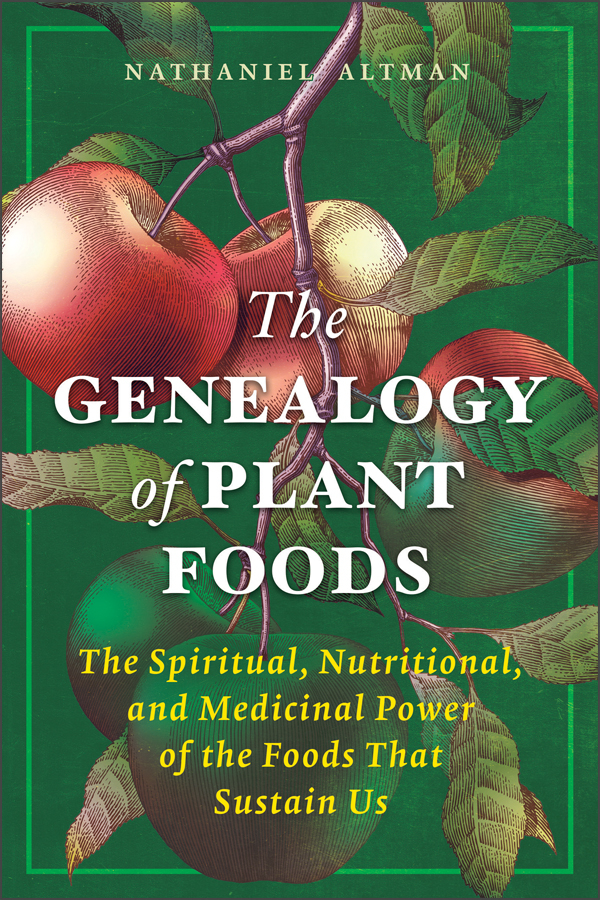
The Genealogy of Plant Foods
By Nathaniel Altman
 Walnuts (Juglandaceae) are among the world’s most popular tree nuts. Fossilized remains of the modern walnut’s predecessors found in Central Europe date back over five million years. It is believed that birds, squirrels, and other small animals spread nuts to other parts of Europe. Over millennia, the Juglandaceae family divided into walnuts and hickory nuts, of which the modern-day pecan is a descendent. As in Europe, birds, squirrels, and other rodents are credited with spreading these nuts to both North America and Asia. Later, human migration also facilitated the spread of nuts. There are presently more than forty different species of walnuts, although the most cultivated—“English,” “Persian,” or “Common” walnut ( Juglands regia)—is believed to have originated in Persia more than nine thousand years ago. Recent research has shown that the Persian walnut is the result of hybridization between two long-extinct species that occurred around 3.45 million years ago, making it one of humanity’s most ancient foods. Fossilized remains of the ancestors of Juglands regia found in northeastern China date back 2.79 million years, to the late Pleistocene to Pliocene eras. Persian walnuts were traded on the Silk Road that connected the Middle East to Asia, and also by British merchants in western Europe (hence the name “English” walnut). Commercial walnut cultivation in the United States began in 1867 near Santa Barbara, California, and eventually spread north to California’s Central Valley, where most of America’s walnuts are grown today. Walnuts are usually eaten on their own as a healthy snack, but can also be added to salads, pasta dishes, breakfast cereals, soups, and baked goods. They are also used to make walnut oil, which is used in salad dressings and is usually expensive. In addition to protein and dietary fiber, walnuts are a good source of omega-3 fatty acids and vitamin E. They are rich in antioxidants which help reduce “bad” LDL cholesterol levels. The monounsaturated and polyunsaturated fats in walnuts have been found to also lower LDL cholesterol levels, while their omega-3 fatty acids may reduce the risk of heart attack and stroke. Like other tree nuts, walnuts contain dietary fiber, which helps lower cholesterol and promotes the growth of healthy gut bacteria. Fiber also makes us feel full, so we eat less. Walnuts are a source of L-arginine, an amino acid that has been shown to lower blood pressure, improve cholesterol, and support blood vessel health. Researchers at the Marshall University School of Medicine in West Virginia have identified several biochemicals—including n–3 (omega- 3) fatty acids, tocopherols, beta-sitosterol, and pedunculagin—found in walnuts that have cancer preventative properties. Their research showed promise in slowing the proliferation of breast, prostate, kidney, and colon cancers. Other emerging research shows that walnuts may contribute to cancer prevention through several compounds working together—ellagitannins, melatonin, and gamma-tocopherol may each work through different paths to reduce oxidative stress, inflammation, and gene expression which, especially in combination, may lead to cancer. Because walnuts are usually eaten raw, nutritionists advise that they have greater antioxidant abilities than nuts which are eaten roasted. Walnuts—known as hu tao ren in Traditional Chinese Medicine— are believed to strengthen the kidneys, lungs, and large intestines. Since the meat of the walnut resembles the two lobes of the human brain, traditional Chinese doctors consider walnuts an excellent “brain food.” As mentioned earlier, walnuts, almonds, and hazelnuts have long been a part of traditional Persian medicine, and have been prescribed to improve brain function. A 2017 article published in the peer-reviewed journal Pharmacological Research highlighted the neuroprotective properties of walnuts—along with almonds and hazelnuts—and their potential to help prevent and even treat symptoms of Alzheimer’s disease (AD) by providing macronutrients, micronutrients, and phytochemicals which affect several pathways in AD pathogenesis (the process by which the disease develops). The authors conclude, “Beyond the molecular activities attributed to the phytochemicals, the use of these tree nuts could be more considered in scientific researches as the effective nutrients for prevention or even management of AD. (Gorji et al. 2018, 115)” After studying dozens of research papers, the authors of an article published in Current Pharmaceutical Design singled out walnuts as the best potential nut to be used in an alternative therapy to help treat memory loss: A number of scientific studies have demonstrated their [referring to nuts] actions against inflammation, oxidative damage, the aging process, as well as dementia or memory loss. However, only walnuts, followed by almonds, hazelnuts, and pistachios, have shown promising results in empirical studies for memory improvements. (Arslan et al. 2020, 4712) The United States is the world’s second largest producer of walnuts after China, followed by Chile, Ukraine, and France. In addition to domestic consumption in the United States, walnuts are a major agricultural export, primarily to Germany, Turkey, China Japan, and Spain. Author Bio: Nathaniel Altman, is the author of The Honey Prescription, Healing Springs, and The New Oxygen Prescription as well as many books on diet, alternative healing, metaphysics, and relationships. He has appeared on more than 150 podcasts, radio, and television programs, and his articles have appeared in major venues. He lives in Brooklyn. https://www.nathanielaltman.com The Genealogy of Plant Foods by Nathaniel Altman published by Inner Traditions International and Bear & Company, © 2026. All rights reserved. http://www.Innertraditions.com Reprinted with permission of publisher. |
Share this article with friends!
 |
Copyright © 1998 - 2026 Mystic Living Today All rights, including copyright, in the content of these Mystic Living Today web pages are owned or controlled for these purposes by Planet Starz, Inc. Terms of Service Disclaimer and Legal Information For questions or comment, contact Starzcast@mysticlivingtoday.com. Reproduction of this page in any form is not allowed without permission of the author and the owner of this site. All material on this web site, including text, photographs, graphics, code and/or software, are protected by international copyright and trademark laws. Unauthorized use is not permitted. You may not modify, copy, reproduce, republish, upload, post, transmit or distribute, in any manner, the material on this web site. Unless permissions is granted. |