
- Home
- Editor's Notes
- Current Issue
- Riki Reflects
- Spiritual Traveler
- Starz Emporium
- Classifieds
- Advertise with Us
- Submissions
- Awards
- About Us
- Contact Us


Don’t Cuddle with Your Thoughts
By Georg Lolos
 Don’t Cuddle with Your Thoughts
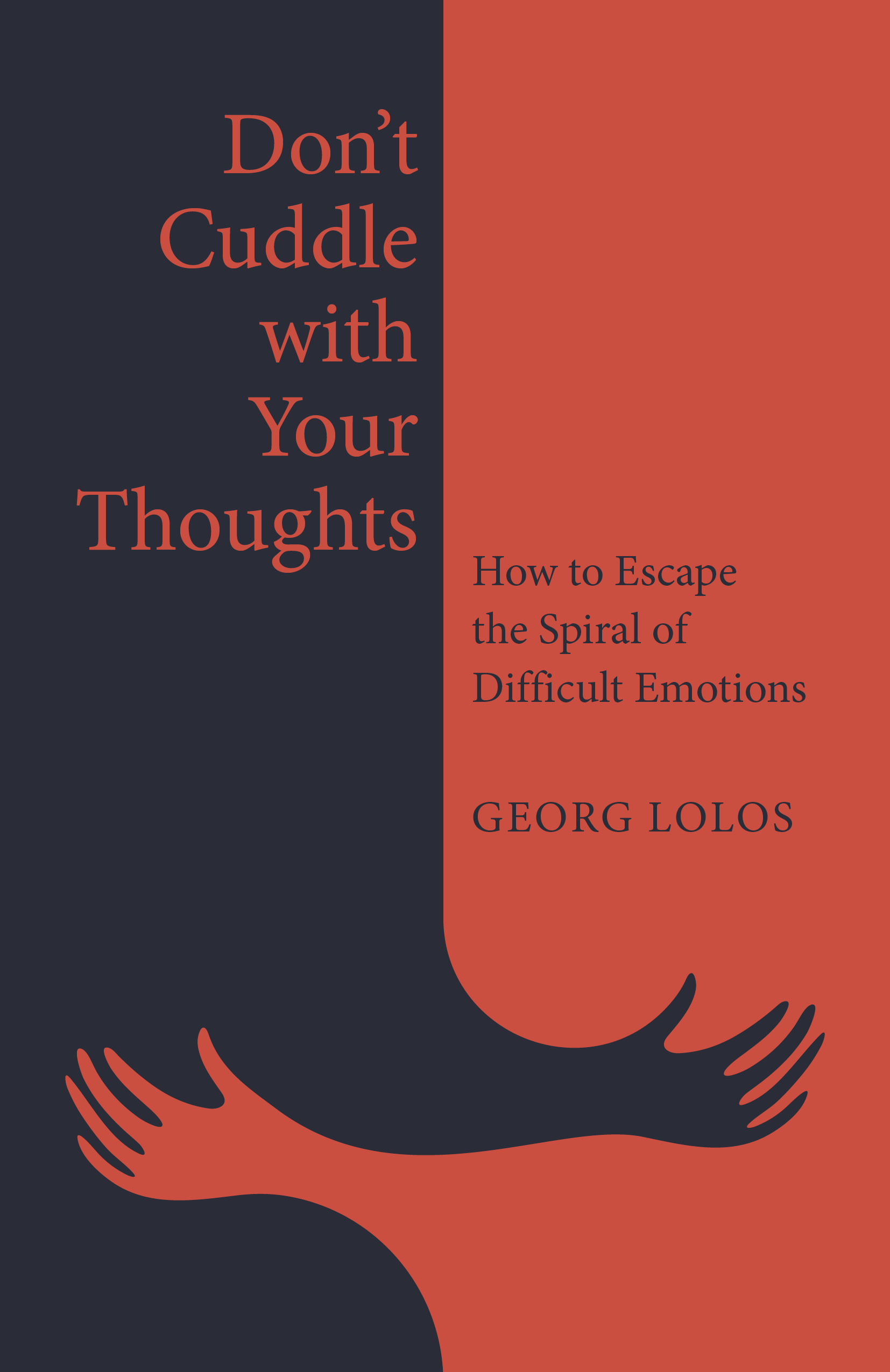
How to Escape the Spiral of Difficult Emotions Georg Lolos Nobody at home or at school taught me to deal with difficult emotional states. That’s why my move to the monastery appeared to be the only way out for me. I was in my early thirties and found myself depressed. Negative emotions had been eating their way into my daily life for years. I was helplessly at the mercy of my fears and the thought of being inferior. I felt like a small child, caught sitting on an endless and terrifying ghost train. In my head, the same worries always kept circling, and I had no idea how I could ever leave this inner place of fear. The Buddhist Center of Zen Master Thich Nhat Hanh seemed to be my only hope for healing. For over 200 years, we have known how important outer cleanliness is for our health, life span, and quality of life. That’s why we take showers, brush our teeth, clean our homes, and disinfect everything we can think of. But what about our inner state? What about what happens throughout the day in our heads and hearts? After all, worries and fears, anger and guilt, hate and greed are present in varying degrees in all people in every social class and culture. Nevertheless, most of us spend very little time or energy keeping our inner space neat and tidy. The results for the psyche, body, and society as a whole have been known for a long time. In the case of burnout, high blood pressure, stomach ulcers, tinnitus, addictions, depression, and much else, our inner constitution is at least partially responsible. For this lack of self-care, the individual and society both pay a very high price. Yet we accept the madness that goes on at times in our thoughts and emotions as God-given. It doesn’t even occur to us that we could influence it, and we leave it to chance as to whether we overcome these inner storms or go on suffering for years because of them. Yet it’s remarkable to note what we otherwise do look after in our daily life: The cleanliness of our clothing, for instance, seems to be more important to us than the clarity of our consciousness. We wouldn’t go out in public in the mornings with a coffee stain on our shirt – no way! But fears, worries, or rage? By all means go out into the world – no problem! Theoretically, we can go without a shower and still be happy despite being smelly. However, we won’t be happy in the long run if we don’t keep our innermost being neat and tidy. This goes for every person regardless of if they are a grocery store clerk, politician, father, teacher, or CEO. If we don’t recognize our difficult inner states and learn to transform them, we suffer first and foremost, and then we let those around us suffer. Many of us only know one single response and hope it brings us relief. We want “more and more.” We consume “more and more” and want “more and more” money, power, and sex; “more and more” love, success, and recognition; “more and more” adventure and experiences. But because you’re reading this book, you’re presumably already aware that all these things don’t have a lasting positive influence on your inner state. They are sedatives, which appear to bring you relief, but even this is very short lived before you start looking for the next kick. Your individual happiness isn’t the only thing that depends on your emotional state: Aggression and violence, theft and greed, and conflicts and terror all have their origin here. All our relationships, the cohabitation of societal groups, and the interactions of entire peoples and nations are determined by people’s inner states. Whether we build walls out of fear and close ourselves off; exploit the environment, animals, and other people out of greed; enter into relationships that aren’t good for us; accept jobs we don’t like; abuse our children or go to war, we do so because we aren’t in a position to deal with the daily madness of our thoughts and emotions. That which is sought and preached in all religions – namely, peace, love, compassion, and balance – are hardly found in anyone on this planet. Yet those who find it know it’s possible, and that it lies inside of us. *** More than 20 years have passed since I went to Plum Village Monastery in France, where I lived for 3 years. Before I arrived there, I felt constantly overwhelmed by emotions such as loneliness and the fear of not being lovable. I was unable to deal with the disparaging voices in my head. During my stay, I learned through mindful self-care to observe my thoughts and feelings and to look after them. I learned to create distance between these painful states and was ultimately able to look at myself with love and acceptance, something which appeared nearly impossible before. When I left the monastery, I knew that I couldn’t lose this knowledge of inner self-care, and that I wanted to share it. Since then, I have not only been working attentively on my own inner states: I have also been able to accompany hundreds of people as they do the same. Over the years, I have realized that we all suffer from the same madness. Year after year, I heard the same thoughts from various people, very often with the same wording. That’s why I began to categorize the emotional states we suffer from. In doing so and contrary to my initial assumption, I realized that there aren’t that many different states. In this book, I’m going to introduce these ten states of consciousness; there really are just ten. Thankfully, a few people with whom I worked agreed to talk about their experiences in this book under a different name. I conducted interviews with around 40 people about the difficult emotional states, which they know especially well. This material, along with my own experience, flowed into this book. No psychiatric cases are going to be introduced nor are changes of consciousness brought on by drug consumption. Instead, this is about the emotional pains that are universal because every person is familiar with them. I have deliberately chosen the examples to show you the many facets of each room of consciousness so that you can potentially recognize yourself in it. The quotes are from people who have been working for a while on their inner states and are thus able to talk about them with quite a bit of reflection. Hopefully this will make it that much easier for you to detect these ten ego states in yourself. This book is intended to be a practical guide. It gives you a diagnostic tool to recognize your problematic inner states and is also a guide to overcome them. You can read it and work with it if a practical suggestion appeals to you. Furthermore, individual words in the text are highlighted; this is an invitation to you to practice. When you see these words, you can internalize a new inner focus. If you see relax, here and now, or observation, take a minute during reading to relax, enter into the here and now, or observe the inner state in which you currently find yourself. The more you can observe your painful states with spontaneity, kindness, and clarity, the easier it will be for you to see through them and put distance between yourself and those states. As a result of this inner distance, the states lose their frightening effect. You recognize that the “ghost train” is only made of cardboard figures in costumes holding props. Now and then you might be frightened, but you no longer experience the fright as being “reality.” This gives you more inner freedom and peace. My teacher, Thich Nhat Hanh, says that peace can only emerge in the world if inner peace prevails. If we don’t put an end to the war within ourselves, peace can’t be established on the outside. This work starts with every single one of us. Ultimately, this planet can’t become a fairer and more peaceful place where we live respectfully and compassionately with ourselves, fellow man, animals, plants, and Earth if we don’t start looking after our inner states. Be it war or peace or exploitation or compassion, everything starts and ends with what is happening in our consciousness. Available this March from O-BOOK! https://www.collectiveinkbooks.com/o-books/our-books/don't-cuddle-with-your-thoughts-escape-difficult-emotions |
Share this article with friends!
 |
Copyright © 1998 - 2026 Mystic Living Today All rights, including copyright, in the content of these Mystic Living Today web pages are owned or controlled for these purposes by Planet Starz, Inc. Terms of Service Disclaimer and Legal Information For questions or comment, contact Starzcast@mysticlivingtoday.com. Reproduction of this page in any form is not allowed without permission of the author and the owner of this site. All material on this web site, including text, photographs, graphics, code and/or software, are protected by international copyright and trademark laws. Unauthorized use is not permitted. You may not modify, copy, reproduce, republish, upload, post, transmit or distribute, in any manner, the material on this web site. Unless permissions is granted. |