
- Home
- Editor's Notes
- Current Issue
- Riki Reflects
- Spiritual Traveler
- Starz Emporium
- Classifieds
- Advertise with Us
- Submissions
- Awards
- About Us
- Contact Us



Rewriting Your Story
By Gina Goldfeder, Ph.D.
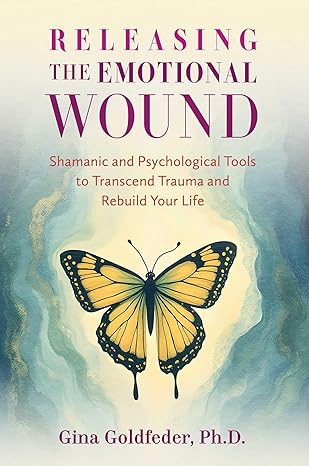 Once Upon a Time is a therapeutic exercise I assign my patients, in which I ask them to write a short story on a sheet of paper about their emotional wound and how they have become accustomed to it. When they finish, they must turn over the sheet of paper and rewrite the story without the wound and describe the experience of feeling free from that darkness. Afterwards, they read both stories aloud and then, together, we proceed to a minute of silence as a kind of posthumous tribute.
The therapeutic intention of this task is “dis-identification” from the wound; that is, the person can observe themselves as separate from the traumatic event that occurred to them. This opens up the possibility of a new internal narrative that allows them to occupy a different place within their life experience. Every time I hear both sides of the same story, I am intrigued to know what the patient wants to do with that narrative. Do they want to use it as a calling card? Is it a family legacy they want to continue? A motivation for change? A good luck charm, or perhaps a sentence? Within each narrative, there is a predominant element from which the patient chooses to tell the story. The choice of theme arises from the particular significance that the wound represents for them; thus, a story can revolve around rejection and the impact it has on their life, or abandonment, shame, disloyalty, or any other relevant emotional aspect that determines the course of events and the final outcome of the narration. When the person has the opportunity to share the story of their traumatic experience, in some way, they force themselves to reconstruct the representation they have of their wound and, by restructuring it on the other side of the page, the brain’s functioning and the way of perceiving and feeling that circumstance are modified. A Year Ago is another effective therapeutic exercise, in which I ask the patient to simulate a conversation with me discussing events, changes, transformations, and achievements that have not yet happened to them, but we mention them as if they had already occurred. For example: “Do you remember a year ago, when setting boundaries was hard for you?” Here, I ask them to use the voice of their future self who has already overcome the challenges and is clear about the path traveled. After a few minutes of maintaining this narrative, the energy begins to rise to create an atmosphere in which we both believe that what we have said is true; that is, we have opened a window to possibility. Another strategy I use is to add the phrase “until now” to emphasize the change in attitude the patient has achieved based on their painful and limiting experiences. Within this active imagination of the future, this phrase marks the end of the difficulty: “I did not know how to set boundaries . . . until now.” Life Coach Miriam wrote a story of her life related to her mother’s abandonment. In describing that wound, she felt lonely and faced extreme situations during her youth, from struggling to make ends meet to the experience of suffering abuse from her boss at work. The emotional abandonment by her mother made it impossible for her to seek help, so she kept secret the various forms of violence she experienced. During her marriage and motherhood, the shadow of her mother’s abandonment reemerged, causing depression and anxiety attacks that made it difficult for her to relate to her children and husband. On the back of the page, in the story without the wound, she described a life in which she was self-assured, capable of pursuing her professional and personal goals without fear of poverty or abuse. The interesting discovery in this case was uncovering, alongside Miriam, aspects she had not imagined, such as her assertiveness in seeking opportunities to start her own business and become a personal image coach, two dreams she had considered impossible in the past. Nostalgia for the Lost Home The place from which a person identifies with their emotional wound is the lane along which their life will progress. By place, I mean the thoughts and emotions accompanying that wound, arising from the social, educational, cultural, and religious context of the person. Let’s take rejection as an example. Natalia is of European origin and hails from a culture where free expression, teamwork, professionalism, planning, and organization are fundamental values within her accustomed work environment. Her motivation for therapy was her frustration at not feeling part of her work group. Over a year and a half of therapeutic work, we addressed the collective rejection she received each time she proposed a project. The difference between the European and Mexican cultures turned out to be her biggest obstacle to performing successfully, eventually leading her to resign. As therapy progressed, we discovered that her childhood wound was rejection from her mother, and her work experience had triggered that past pain. Her childhood wound revolved around a memory of when she was seven years old: “My mother locked herself in her room for a year, lying down with the lights turned off. During that time, she didn’t look at me, and my father was in charge of feeding her and taking me to school. In the afternoons, I was left alone while he went to work. Family meals and tea gatherings to talk about things that excited us and made us happy as a family stopped happening. My mother tried to take her own life a couple of times, which made me question if I was not important for her to decide to stay with me in this world.” When Natalia experienced disapproval at work, this rejection became a reminder of her childhood wound, the result of living with a depressed mother who stopped looking at her and providing the care and protection she needed. About the Author: Gina Goldfeder, Ph.D., is a psychologist who specializes in individual and couples psychotherapy. Working with clients for almost thirty years, she draws on her training in healing modalities informed by shamanism, such as dream interpretation, as well as psychodrama, sacred geometry, and ThetaHealing. Gina offers courses and workshops. She lives in Mexico City.https://ginagoldfeder.comPrinted excerpt from Releasing the Emotional Wound: Shamanic and Psychological Tools to Transcend Trauma and Rebuild Your Life Shamanic and Psychological Tools to Transcend Trauma and Rebuild Your Life with permission of Findhorn Press, a division of Inner Traditions International. International. https://www.innertraditions.com/moss-medicine |
Share this article with friends!
 |
Copyright © 1998 - 2026 Mystic Living Today All rights, including copyright, in the content of these Mystic Living Today web pages are owned or controlled for these purposes by Planet Starz, Inc. Terms of Service Disclaimer and Legal Information For questions or comment, contact Starzcast@mysticlivingtoday.com. Reproduction of this page in any form is not allowed without permission of the author and the owner of this site. All material on this web site, including text, photographs, graphics, code and/or software, are protected by international copyright and trademark laws. Unauthorized use is not permitted. You may not modify, copy, reproduce, republish, upload, post, transmit or distribute, in any manner, the material on this web site. Unless permissions is granted. |