
- Home
- Editor's Notes
- Current Issue
- Riki Reflects
- Spiritual Traveler
- Starz Emporium
- Classifieds
- Advertise with Us
- Submissions
- Awards
- About Us
- Contact Us


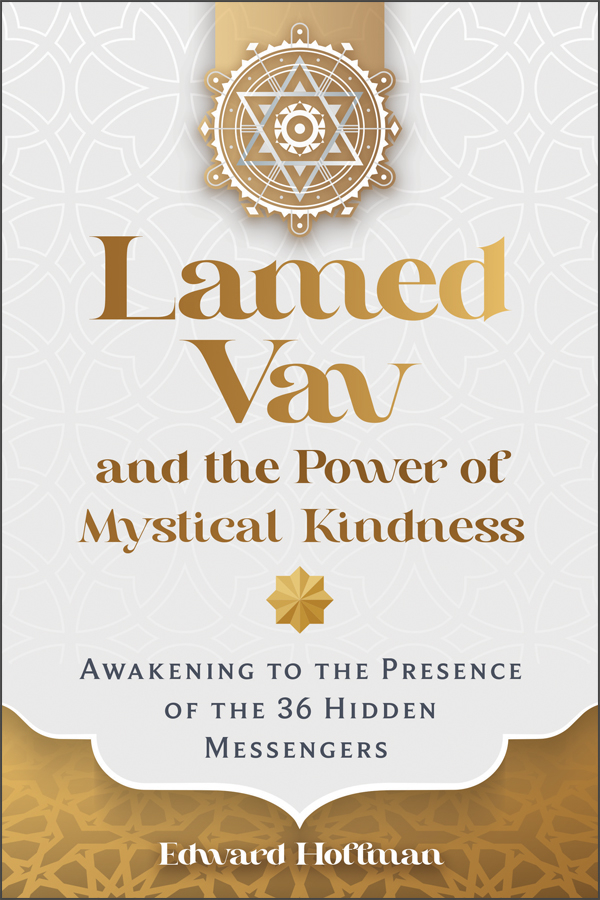
Lamed Vav
By Edward Hoffman
 Since my earliest days in Jewish day school in New York City, I was fascinated by mystical tales and folklore. My friends and I were avid readers of Greek and then Norse mythology, years before these became staples of superhero movies like Hercules and Thor. Though we knew, of course, that Mount Olympus and Asgard didn’t really exist, our youthful minds easily conjured alluring images of their majesty—quite a contrast to the grimy Bronx streets that surrounded our small school. I remember passionate debates on the school bus home as to which books on classical mythology were the best and which were mere popularizations. But not surprisingly, we gravitated toward Jewish legends, which tended to complement our fledgling biblical and Talmudic studies.
Among the folkloric tales celebrating healers, holy seers, and wonder-working rabbis were those about a unique group of hidden sages known as the Lamed Vav (literally “thirty-six” in Hebrew). Their purpose on Earth seemed to involve performing anonymous acts of goodness—often just at the right time—and I liked those stories the most. They reminded me of Superman, whose comic books each month I avidly consumed, for he too embodied a secret identity and altruistically strove to help others in need. Decades later, a plethora of popular and academic tomes would trace the Superman character to longstanding Judaic theology and mystical lore. These tomes would delve too into the biographies of his creators: cartoonists Jerry Siegel and Joe Shuster, sons of Jewish immigrants who fled East European pogroms to settle in the American Midwest. Later, after completing my degrees in psychology, I became strongly interested in the relevance of Jewish thought to new developments in my field. Humanistic psychology, in particular, was offering an exciting “third wave” to view individual personality and its potential far more optimistically than mainstream approaches based on pathology or animal experiments. The work of seminal figures like Abraham Maslow, Rollo May, and Carl Rogers presented innovative ideas and treatment methods, often explicitly drawing on Eastern and Western spiritual traditions for insights. These included Buddhism, Daoism (then transliterated in English as Taoism), Hinduism, Native American and Indigenous shamanism, Sufism, and Yoga. But virtually no one was exploring Judaism in this important way. I decided to pick up the cudgel, and to this end I authored two books and co-authored a third, the latter with Rabbi Zalman M. Schachter-Shalomi, all in a five-year period, on Jewish spirituality and contemporary psychology. These were The Way of Splendor, The Heavenly Ladder, and Sparks of Light: Counseling in the Hasidic Tradition. More than thirty years later, I would collaborate with Rabbi Schachter-Shalomi (“Reb Zalman” as he liked to be called) on his memoir, My Life in Jewish Renewal, published soon after his death at nearly age ninety. As years passed, I wrote major biographies of Abraham Maslow and his influential mentor Alfred Adler, as well as varied books on psychological and Jewish topics. I also began lecturing widely at synagogues, universities, and “human growth” centers like the Esalen Institute—both in the United States and abroad—on how classic Jewish notions from the Talmud, Kabbalah, and Hasidism complemented new efforts to understand and promote well-being and happiness. As a visiting scholar in the department of religion at the University of Tokyo, I plainly saw that my presentations carried a universality that transcended geographic and historical boundaries. This fact became even more apparent when my book The Way of Splendor was translated into Japanese by the prominent Jungian scholar Shoji Muramoto in Osaka. Offering daylong or weekend workshops that incorporated experiential activities I derived from Jewish spirituality was especially satisfying to me. Among the most compelling was one that I had created in The Heavenly Ladder, and it concerned the Lamed Vav. After recounting this legend or mythos, I would invite my participants to think back over the course of their lives and mentally identify people who may have been among these extraordinary individuals. I would add: You may also assume that at all times in your life, there is a Lamed Vav present—perhaps someone you’ve scarcely recognized in this exalted domain of transcendent kindness. If so, who is it? More than for any other activity, I found that this one evoked intense emotions, and especially tears. Some participants, their voices half-breaking with perhaps long-suppressed feeling, would recall a beloved grandparent or other relative, an inspiring teacher, supportive mentor, empathic neighbor or family friend. Usually, participants in midlife or older were most likely to become so emotionally engaged. But sometimes young adults and even teens were visibly moved by their recollections, typically intertwined with expressions of gratitude and happiness. In positive psychology today, such emotion is called moral elation—and believe it or not, Thomas Jefferson described it well in a letter to a friend. Moral elation comprises our feeling of uplift when we witness (or even hear or read about) an act of exceptional goodness—and it may be hardwired within us. As you may suspect, growing scientific evidence suggests that moral elation is valuable for human health. In my own collaborative research, tears of joy have proven to be beneficial mentally as well as physically to adults of all ages. My purpose in writing this book, therefore, is to amplify my long-standing interest in the Lamed Vav mythos by highlighting its history, explicating the notion, based on Kabbalah and Hasidism, that a “Lamed Vav spark” exists within each of us and creates a “Lamed Vav consciousness.” I then provide a variety of guided activities to boost this consciousness in everyday life. In this way, we not only enhance our receptiveness to Lamed Vav figures around us, but also better act in this powerful capacity ourselves. We live amidst a sea of loneliness in the Western world—perhaps above all in the United States—and for this reason, the Lamed Vav tradition seems especially timely as an antidote to our society’s dependency on an individualistic outlook. As the influential psychologist Rollo May pointedly wrote in his last major book, The Cry for Myth, “Americans cling to the myth of individualism, as though it were the only normal way to live . . . Called ‘rugged individualism’ in political circles, and ‘fierce individualism,’ by some historians, this myth has obvious advantage for a democracy. But it exhibits the basic flaw of leaving us no solid community to call our own . . . It is imperative that we rediscover myths which can give us [a sense of relationship] to confront this widespread depression.” While researching my biography of psychologist Abraham Maslow, I spent several hours with his longtime friend Rollo May at his hilltop home, impressively overlooking the San Francisco Bay. In talking about many aspects of humanistic psychology, he articulated this same theme. For such reasons, I am convinced that he would regard the Lamed Vav mythos as a valuable and much-needed corrective for us individually and Western society as a whole. If I have succeeded in amplifying this wise, ancient tradition for our contemporary era, my goals will have been fulfilled. Author Bio: Edward Hoffman is a licensed psychologist and has been an adjunct associate professor at Yeshiva University in New York City for more than 20 years. An award-winning author, his books include Paths to Happiness, The Wisdom of Maimonides, and The Kabbalah Reader and have been translated into more than a dozen languages. He lectures widely on psychology and Jewish spirituality throughout the United States and abroad. Lamed Vav and the Power of Mystical Kindness by Edward Hoffman published by Inner Traditions International and Bear & Company, © 2026. All rights reserved. http://www.Innertraditions.com Reprinted with permission of publisher. |
Share this article with friends!
 |
Copyright © 1998 - 2026 Mystic Living Today All rights, including copyright, in the content of these Mystic Living Today web pages are owned or controlled for these purposes by Planet Starz, Inc. Terms of Service Disclaimer and Legal Information For questions or comment, contact Starzcast@mysticlivingtoday.com. Reproduction of this page in any form is not allowed without permission of the author and the owner of this site. All material on this web site, including text, photographs, graphics, code and/or software, are protected by international copyright and trademark laws. Unauthorized use is not permitted. You may not modify, copy, reproduce, republish, upload, post, transmit or distribute, in any manner, the material on this web site. Unless permissions is granted. |