

The Roots of Pranayama
The same stream of life that runs through my veins night and day runs through the world and dances in rhythmic measures.
Rabindranath Tagore, Gitanjali
It is easy to imagine how in our earliest existence as humans the breath must have seemed profoundly mysterious. We surely observed the first breath of a newborn infant and associated it with life and just as surely observed a person’s last breath and associated it with death. This would have made us deeply curious about the breath and breathing, just as we were curious about the daily appearance of the sun, seasonal changes in light and weather, and the growth and withering of plants and people across the span of their lives. Without fully understanding the nature of things, including the nature of the breath and breathing, we no less tried to explain them, often mythologizing and ritualizing them, even as we came to understand them fairly well.
Breathing is one of the few things in our autonomic being that we can directly affect and immediately feel with great or subtle effect. Even when mysterious, we discover that we can control it, albeit with definite limitations. Without assistance, we cannot consciously hold the breath in or out for hours or days, which some ancient to modern yogis have claimed to do.* Yet, in the realm of what we can control, the effects can be profound. This is the connection of prana, pranayama, and life.
BREATH AND BREATHING ACROSS CULTURES AND TIMES
The idea that breath matters in every aspect of life has deep roots in human experience and cultures. Across diverse places and times, breath has been intimately connected with life, spirit, and well-being. We have recognized, ritualized, and refined the breath and breathing since the earliest of times—whether seen as a life force that pervades the cosmos (the Vedic Brahmin’s prana, the Chinese qi, the Greek pneuma), a divine gift from the gods (the Hebrew ruach, the Egyptian ka, the Mayan ik’), a practical tool for maintaining health and balance (the Taoist’s qigong), or as a force for generating extraordinary powers or even transcendence (the yogi’s pranayama).*
The earliest known recognition and celebration of breath and breathing is found in ancient shamanic cultures, some practices of which have persisted continuously to the present.1 In Australian aboriginal cultures—among the oldest continuous living traditions in the world (dating back at least forty thousand years)—we find the iconic didgeridoo (Fig. 1.1), played using circular breathing, where the player inhales through the nose while simultaneously exhaling through the mouth. Its drone-like sound is believed to mimic the primordial energies of Dreamtime creation cosmology, with the breath seen as a vital connection between the musician and the spiritual essence of the land.
Trance dance (or n/um tchai), where breath and rhythmic movement induce altered states of consciousness for healing and communication with the spirit world, is found in ancient shamanic cultures of the San peoples in southern Africa.† Deeply rooted in their cultures since at least the late Paleolithic period (ten-to-twenty thousand years ago), in the trance dance, shamans and participants engage in rhythmic breathing and sometimes hyperventilation to enter deep states of trance. This altered state allows the shaman to contact spirit entities and channel their healing energy (n/um). The n/um is believed to be activated in the body through breath and dance, allowing the shaman to heal illnesses by “pulling” out harmful spiritual forces.
Among the Evenki people and other Siberian and Central Asian tribes dating to around 15,000 BCE, we find shamans using breath in their ceremonies—sometimes with psychoactive plants that foreshadow such practices in Vedic, yogic, and tantric rituals—for entering trance states to journey into the spirit world.2 In healing rituals, shamans may “blow” over a patient’s body, symbolizing the transmission of spiritual power or the expulsion of harmful entities. The act of blowing or breathing over sacred objects or individuals is common, reflecting the belief that the breath carries the shaman’s life force or power.
Shamanic practices on the Central Asian steppe developed in tandem with early nomadic cultures. The Bronze Age, which began in most of Eurasia around 3,000 BCE and continued until as late as the Roman republic, saw the rise there of organized ritual practices including breath-focused trances, ancestor worship, and spirit possession. Archaeological evidence, such as burials with ritual artifacts, suggests that shamanism has deep roots across that expanse, from Mongolian to Turkic cultures.3 Tuvan shamanism, with its unique throat singing and breathing (Fig. 1.2), is believed to have ancient origins that coincide with the rise of pastoral nomadism in the Altai-Sayan region. The throat singing technique, khoomei, is a form of overtone singing in which a singer produces two or more pitches simultaneously—a low fundamental drone and one or more high-pitched harmonic overtones that resemble whistling, flute-like tones, or buzzing. Linguistic and cultural studies reveal that throat singing was used to invoke spiritual power and connect with nature, and has likely been practiced for thousands of years, with its roots in the Bronze Age or earlier.4 Whether such specific practices existed in South Asia—the birthplace of pranayama—at that time is unknown, although there is no evidence of it.
THE SEEDS OF PROTO-YOGA AND PROTO-PRANAYAMA
For thousands of years before the emergence of the Silk Roads and the Maritime-Silk Road in early-second-century BCE, people across Eurasia were connected in myriad ways, especially through migration, nomadic movement, trade, exploration, and war.5 Through these rich connections there were exchanges of languages, technologies, and ideas. Although relatively insulated by the necklace of the Himalayan, Karakorum, and Hindu Kush mountains, as well as by vast seas, ancient India was in that cultural mix—at times, close to its main crossroads (see Fig. 1.3 on page 24 and Fig. 1.4 on page 26).
At the northern reaches of ancient India’s home on the South Asian subcontinent, the Indus, Ganges, and Yamuna rivers pour forth from those mountains, with the Indus long ago offering a passageway for nomadic pastoralists trekking to greener pastures, connecting vast landscapes and diverse cultures. From Central Asia and across steppes and deserts to Mongolia and Siberia, east to Tibet and China, west along river valleys and small mountain passes to the Iranian plateau, the Zagros Mountains, Anatolia, and the Mediterranean world, and from the five- thousand-mile coastline of India to port cities near and far across the seas, people from across this vast landscape connected.*
Starting around 1500 BCE, nomadic pastoralists from the Central steppes, with prior contacts and exchanges with cultures from Anatolia to Mongolia and Siberia, began arriving in northwest India, traveling through the mountain passages that connect Central Asia and India.6 They would have witnessed the final vestiges of the Indus Valley civilization, its once-great cities of Harappa and Mohenjo Daro settled into dust.7 The Indigenous Indians, before even hearing the migrants speak, would have beheld things they had never seen: Horses. Wheels. Chariots. Until that time, there had never been horses, wheels, or chariots in India.8 Imagine their awe, and perhaps fear too. Horses, wheels, and chariots would soon figure prominently in the myths, stories, and rituals in the very sources in India where beliefs and ideas about breath and breathing were first expressed—the Vedic corpus.
Gradually, more and more of the ancient nomads settled in northwestern India. They easily established their social dominance, which greatly expanded across the next thousand years to touch nearly all of India, even as Indigenous cultures throughout India and from afar would affect and influence them in direct, oblique, and complex ways. The northern migrants also came bearing ideas and rituals relating to just about everything in life and beyond. They brought not just new technologies but, in all likelihood, religious and shamanic ideas, rituals, and practices drawn from Siberian, Mongolian, Turkic, and many other cultures. Through a rich and complex history of cultural connections and exchanges, including with Indigenous Dravidian and other Indian cultures, these ideas and practices developed in new ways.
Sanskrit, one of the oldest Proto-Indo-European (PIE) languages, came into India with the nomadic pastoralists, in particular those rooted in the Yamnaya, Bactrian, and Oxus civilizations.9 Those who used this language, who brought it to India, were the original priests, chroniclers, philosophers, and historians of India and the authors of the Vedic corpus. This is India’s most ancient source on religion, cosmology, philosophy, science, social relationships, and the rituals and principles by which to live, worship, die, and gain liberation or transcendence. The breath and conscious breathing were increasingly at the heart of it all.* They claimed their words were not theirs but apauruseya (of no authors’, not even the divine), although divinely transmitted.
One of the core Vedic ideas, rta (order, truth) is an overarching principle that signifies the true natural, cosmic, and moral order of the universe. While the universe is seen as divided between the human order and the divine order, their mutual existence is mediated by sacrificial acts in which fluid (rasa), fire (agni), and air (vayu) are the pervasive elements.10 Air in the form of breath (prana, or “life force”) is always the active element. This foundational concept comes into play throughout the development of Indian society, religions, and culture, and is a consistent force in the development of pranayama. Rta also has social significance—it is the foundation of varna, the Indian caste system. Not surprisingly, the Vedic compilers assigned themselves to the most elite caste, Brahmins who ruled over all others, as priests.
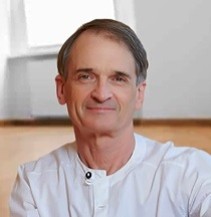
Author Bio: Mark Stephens is the author of five bestselling yoga books, including Teaching Yoga and Yoga Therapy. Practicing since 1991 and teaching worldwide since 1996, he has studied and practiced in the ashtanga, Iyengar, and tantra traditions and has engaged deeply with yoga histories and philosophies, somatic psychology, and evidence-based sources. Mark has trained yoga teachers and therapists for three decades and served as the “For Teachers” columnist for Yoga Journal for two years. He lives on California’s central coast. https://markstephensyoga.com
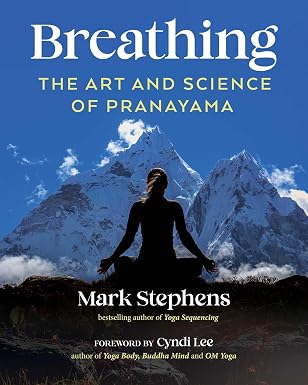
Breathing by Mark Stephens published by Inner Traditions International and Bear & Company, © 2026. All rights reserved. http://www.Innertraditions.com Reprinted with permission of publisher.
The same stream of life that runs through my veins night and day runs through the world and dances in rhythmic measures.
Rabindranath Tagore, Gitanjali
It is easy to imagine how in our earliest existence as humans the breath must have seemed profoundly mysterious. We surely observed the first breath of a newborn infant and associated it with life and just as surely observed a person’s last breath and associated it with death. This would have made us deeply curious about the breath and breathing, just as we were curious about the daily appearance of the sun, seasonal changes in light and weather, and the growth and withering of plants and people across the span of their lives. Without fully understanding the nature of things, including the nature of the breath and breathing, we no less tried to explain them, often mythologizing and ritualizing them, even as we came to understand them fairly well.
Breathing is one of the few things in our autonomic being that we can directly affect and immediately feel with great or subtle effect. Even when mysterious, we discover that we can control it, albeit with definite limitations. Without assistance, we cannot consciously hold the breath in or out for hours or days, which some ancient to modern yogis have claimed to do.* Yet, in the realm of what we can control, the effects can be profound. This is the connection of prana, pranayama, and life.
BREATH AND BREATHING ACROSS CULTURES AND TIMES
The idea that breath matters in every aspect of life has deep roots in human experience and cultures. Across diverse places and times, breath has been intimately connected with life, spirit, and well-being. We have recognized, ritualized, and refined the breath and breathing since the earliest of times—whether seen as a life force that pervades the cosmos (the Vedic Brahmin’s prana, the Chinese qi, the Greek pneuma), a divine gift from the gods (the Hebrew ruach, the Egyptian ka, the Mayan ik’), a practical tool for maintaining health and balance (the Taoist’s qigong), or as a force for generating extraordinary powers or even transcendence (the yogi’s pranayama).*
The earliest known recognition and celebration of breath and breathing is found in ancient shamanic cultures, some practices of which have persisted continuously to the present.1 In Australian aboriginal cultures—among the oldest continuous living traditions in the world (dating back at least forty thousand years)—we find the iconic didgeridoo (Fig. 1.1), played using circular breathing, where the player inhales through the nose while simultaneously exhaling through the mouth. Its drone-like sound is believed to mimic the primordial energies of Dreamtime creation cosmology, with the breath seen as a vital connection between the musician and the spiritual essence of the land.
Trance dance (or n/um tchai), where breath and rhythmic movement induce altered states of consciousness for healing and communication with the spirit world, is found in ancient shamanic cultures of the San peoples in southern Africa.† Deeply rooted in their cultures since at least the late Paleolithic period (ten-to-twenty thousand years ago), in the trance dance, shamans and participants engage in rhythmic breathing and sometimes hyperventilation to enter deep states of trance. This altered state allows the shaman to contact spirit entities and channel their healing energy (n/um). The n/um is believed to be activated in the body through breath and dance, allowing the shaman to heal illnesses by “pulling” out harmful spiritual forces.
Among the Evenki people and other Siberian and Central Asian tribes dating to around 15,000 BCE, we find shamans using breath in their ceremonies—sometimes with psychoactive plants that foreshadow such practices in Vedic, yogic, and tantric rituals—for entering trance states to journey into the spirit world.2 In healing rituals, shamans may “blow” over a patient’s body, symbolizing the transmission of spiritual power or the expulsion of harmful entities. The act of blowing or breathing over sacred objects or individuals is common, reflecting the belief that the breath carries the shaman’s life force or power.
Shamanic practices on the Central Asian steppe developed in tandem with early nomadic cultures. The Bronze Age, which began in most of Eurasia around 3,000 BCE and continued until as late as the Roman republic, saw the rise there of organized ritual practices including breath-focused trances, ancestor worship, and spirit possession. Archaeological evidence, such as burials with ritual artifacts, suggests that shamanism has deep roots across that expanse, from Mongolian to Turkic cultures.3 Tuvan shamanism, with its unique throat singing and breathing (Fig. 1.2), is believed to have ancient origins that coincide with the rise of pastoral nomadism in the Altai-Sayan region. The throat singing technique, khoomei, is a form of overtone singing in which a singer produces two or more pitches simultaneously—a low fundamental drone and one or more high-pitched harmonic overtones that resemble whistling, flute-like tones, or buzzing. Linguistic and cultural studies reveal that throat singing was used to invoke spiritual power and connect with nature, and has likely been practiced for thousands of years, with its roots in the Bronze Age or earlier.4 Whether such specific practices existed in South Asia—the birthplace of pranayama—at that time is unknown, although there is no evidence of it.
THE SEEDS OF PROTO-YOGA AND PROTO-PRANAYAMA
For thousands of years before the emergence of the Silk Roads and the Maritime-Silk Road in early-second-century BCE, people across Eurasia were connected in myriad ways, especially through migration, nomadic movement, trade, exploration, and war.5 Through these rich connections there were exchanges of languages, technologies, and ideas. Although relatively insulated by the necklace of the Himalayan, Karakorum, and Hindu Kush mountains, as well as by vast seas, ancient India was in that cultural mix—at times, close to its main crossroads (see Fig. 1.3 on page 24 and Fig. 1.4 on page 26).
At the northern reaches of ancient India’s home on the South Asian subcontinent, the Indus, Ganges, and Yamuna rivers pour forth from those mountains, with the Indus long ago offering a passageway for nomadic pastoralists trekking to greener pastures, connecting vast landscapes and diverse cultures. From Central Asia and across steppes and deserts to Mongolia and Siberia, east to Tibet and China, west along river valleys and small mountain passes to the Iranian plateau, the Zagros Mountains, Anatolia, and the Mediterranean world, and from the five- thousand-mile coastline of India to port cities near and far across the seas, people from across this vast landscape connected.*
Starting around 1500 BCE, nomadic pastoralists from the Central steppes, with prior contacts and exchanges with cultures from Anatolia to Mongolia and Siberia, began arriving in northwest India, traveling through the mountain passages that connect Central Asia and India.6 They would have witnessed the final vestiges of the Indus Valley civilization, its once-great cities of Harappa and Mohenjo Daro settled into dust.7 The Indigenous Indians, before even hearing the migrants speak, would have beheld things they had never seen: Horses. Wheels. Chariots. Until that time, there had never been horses, wheels, or chariots in India.8 Imagine their awe, and perhaps fear too. Horses, wheels, and chariots would soon figure prominently in the myths, stories, and rituals in the very sources in India where beliefs and ideas about breath and breathing were first expressed—the Vedic corpus.
Gradually, more and more of the ancient nomads settled in northwestern India. They easily established their social dominance, which greatly expanded across the next thousand years to touch nearly all of India, even as Indigenous cultures throughout India and from afar would affect and influence them in direct, oblique, and complex ways. The northern migrants also came bearing ideas and rituals relating to just about everything in life and beyond. They brought not just new technologies but, in all likelihood, religious and shamanic ideas, rituals, and practices drawn from Siberian, Mongolian, Turkic, and many other cultures. Through a rich and complex history of cultural connections and exchanges, including with Indigenous Dravidian and other Indian cultures, these ideas and practices developed in new ways.
Sanskrit, one of the oldest Proto-Indo-European (PIE) languages, came into India with the nomadic pastoralists, in particular those rooted in the Yamnaya, Bactrian, and Oxus civilizations.9 Those who used this language, who brought it to India, were the original priests, chroniclers, philosophers, and historians of India and the authors of the Vedic corpus. This is India’s most ancient source on religion, cosmology, philosophy, science, social relationships, and the rituals and principles by which to live, worship, die, and gain liberation or transcendence. The breath and conscious breathing were increasingly at the heart of it all.* They claimed their words were not theirs but apauruseya (of no authors’, not even the divine), although divinely transmitted.
One of the core Vedic ideas, rta (order, truth) is an overarching principle that signifies the true natural, cosmic, and moral order of the universe. While the universe is seen as divided between the human order and the divine order, their mutual existence is mediated by sacrificial acts in which fluid (rasa), fire (agni), and air (vayu) are the pervasive elements.10 Air in the form of breath (prana, or “life force”) is always the active element. This foundational concept comes into play throughout the development of Indian society, religions, and culture, and is a consistent force in the development of pranayama. Rta also has social significance—it is the foundation of varna, the Indian caste system. Not surprisingly, the Vedic compilers assigned themselves to the most elite caste, Brahmins who ruled over all others, as priests.
Author Bio: Mark Stephens is the author of five bestselling yoga books, including Teaching Yoga and Yoga Therapy. Practicing since 1991 and teaching worldwide since 1996, he has studied and practiced in the ashtanga, Iyengar, and tantra traditions and has engaged deeply with yoga histories and philosophies, somatic psychology, and evidence-based sources. Mark has trained yoga teachers and therapists for three decades and served as the “For Teachers” columnist for Yoga Journal for two years. He lives on California’s central coast. https://markstephensyoga.com
Breathing by Mark Stephens published by Inner Traditions International and Bear & Company, © 2026. All rights reserved. http://www.Innertraditions.com Reprinted with permission of publisher.
