


Fear can feel paralyzing, but if you can find the strength to remain present and listen to your fear, it can shift, reducing in intensity. I often saw this as a licensed clinical psychologist guiding people through exploring what brought them to therapy and why change was difficult for them. I helped people see that we all can feel calmer and more hopeful after working our way through a three-step shifting process of processing fears.
Step 1: Feel your fear. Fear can help us react instantly and instinctively to danger, but far too often, fear arises in situations where we aren’t in physical danger and scares us into avoidance. Yet on some level, we know this painful, unsettling emotion will come up again, so avoidance never really works. Ideally, you’ll get used to sitting with your fear long enough to experience it start to fade on its own. That will clear the way for you to question why your fear has come up and what you can learn from it so that it doesn’t come back so frequently and fiercely.
Whenever you’re feeling scared, tune into your body. Try closing your eyes and observing whether your muscles are tightening, and if so, where that’s happening. Your neck, your chest, or somewhere else? Is your heart pounding or racing? You might place your hand over your heart as you experience the life force within you, allowing trust to arise and replace fear. As you observe your fear, feeling it, your nervous system will calm itself.
You can also try a calming breathing exercise rather than simply wait for the fear to subside. I like to use the 4-7-8 breathing technique Dr. Andrew Weill recommends: Inhale to a count of four, hold for a count of seven, and release the air slowly, over a count of eight. Do it a few times and see how you feel in your body. When your body switches into a more relaxed state, you can think more clearly.
Then, too, you can splash your face with cold water—a known remedy for the fear response.
Over time, experiencing again and again that you can have some control over your fear and its effects on you can help you be less fearful when you’re not actually in danger. You’ll switch more quickly into examining the basis of your fear and whether it’s rational.
Step 2: Question your fear. Sometimes, our fears aren’t as rational as we think they are. Once you’re not overwhelmed by your fear, you can explore the likelihood that the loss or crisis is one you can move through. We all know that intellectually that life goes on, but fear can make us doubtful that we can ever be happy or laugh again after a terrible loss. The pain will never disappear completely, but over time, it will lessen—sometimes quite considerably.
In a crisis that leaves you scared about the future, you might ask yourself, “Will this matter in six months? A year? Three years?” These questions can help you put the situation into context.
Keep in mind that you can take actions to renew your sense of security. Take the case of a widow who questioned her fears and learned that what most scared her was the prospect of feeling lonely in the days ahead. After further exploring and questioning her fear, she realized that if she strengthened her connections to others, her fear would begin to fade. She made a point of investing in her relationships with family, friends, and neighbors and beginning new friendships. In time, she felt more comfortable and less fearful despite no longer having her lifelong companion and having to face some of the other stressors of widowhood, including not having her spouse’s practical support in dealing with everyday tasks. The experience of questioning her fear helped her with that challenge, too, and she was able to identify ways to address the problem.
As you question your fear, know that it might be rooted in a distorted belief or perception. You might be seeing a catastrophe that turns out to be a crisis you can manage after all. You might be seeing nothing but loss and be forgetting that with endings and losses come beginnings and gains. You have some control over the next chapter that follows the crisis. You can start exploring ways to meet your emotional and practical needs now that it’s clear your situation has changed.
Fear will keep you from being curious, hopeful, and creative about shaping the road ahead. In a crisis, you want to allow yourself to be a little vulnerable, admit you could use some help, and seek and accept it. So, question the thoughts attached to your fears. It will help you be resilient.
Step 3: Learn from your fear by consulting with your Wise Inner Self. To reduce any fears about what you’re going through lately, you can also work with your Wise Inner Self so you don’t fall back into crippling fear. Your unconscious contains much wisdom and strength you can draw upon. Start by retreating to a quiet, isolated space and sit comfortably. Use meditative techniques to calm your rational, analytical mind. When you’re relaxed and feel open to messages from your unconscious, you can ask your Wise Inner Self, an aspect of your unconscious that knows things your conscious mind doesn’t, to appear and guide you.
Ask your Wise Inner Self, “What do I need to know right now about the ending or loss I’ve experienced/am experiencing?” Wait for the answer to come to you. Again, simply observe what you feel, sense, or know after receiving the answer. When you’re ready, thank your Wise Inner Self for helping you. Then, you can contemplate what it told you—that is, what wisdom from your unconscious arose. You might also ponder how your Wise Inner Self appeared to you or how you experienced it to see if that yields any helpful insights.
You can use this exercise several times to gain more insights and even draw strength from your unconscious. You can also ask your Wise Inner Self more questions, too, such as, “What do I need to let go of so I can move forward?” and “What can I draw in to help me at this time?” These two questions might help you feel that you’re releasing energy that supported old habits and bringing in fresh energy that will support new ones.
The more you engage and learn from your Wise Inner Self, the easier it will be to understand its messages to you from the unconscious. It may also be easier to apply your newfound wisdom to your everyday life because you feel an internal energetic shift. For example, your Wise Inner Self might guide you to let go of the past and your need to understand why a loss happened. That could help you catch yourself ruminating over what you could have done to prevent it. Thinking less about “should haves” and “could haves” may be very helpful for you, giving you the strength to begin healing from the loss and helping you feel more confident and hopeful.
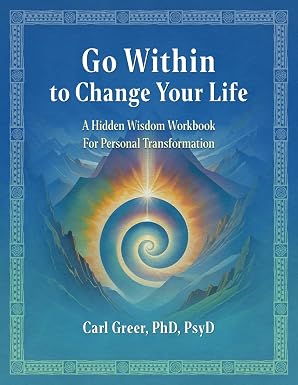
Carl Greer, PhD, PsyD, is a retired clinical psychologist and Jungian analyst, a businessman, and a shamanic practitioner, author, and philanthropist, funding over 60 charities and more than 2,000 past and current Greer scholars. He has taught at the C.G. Jung Institute of Chicago and been on staff at the Replogle Center for Counseling and Well-Being. His new book is Go Within to Change Your Life: A Hidden Wisdom Workbook for Personal Transformation. Learn more
Amazon: https://a.co/d/0gish58x
Step 1: Feel your fear. Fear can help us react instantly and instinctively to danger, but far too often, fear arises in situations where we aren’t in physical danger and scares us into avoidance. Yet on some level, we know this painful, unsettling emotion will come up again, so avoidance never really works. Ideally, you’ll get used to sitting with your fear long enough to experience it start to fade on its own. That will clear the way for you to question why your fear has come up and what you can learn from it so that it doesn’t come back so frequently and fiercely.
Whenever you’re feeling scared, tune into your body. Try closing your eyes and observing whether your muscles are tightening, and if so, where that’s happening. Your neck, your chest, or somewhere else? Is your heart pounding or racing? You might place your hand over your heart as you experience the life force within you, allowing trust to arise and replace fear. As you observe your fear, feeling it, your nervous system will calm itself.
You can also try a calming breathing exercise rather than simply wait for the fear to subside. I like to use the 4-7-8 breathing technique Dr. Andrew Weill recommends: Inhale to a count of four, hold for a count of seven, and release the air slowly, over a count of eight. Do it a few times and see how you feel in your body. When your body switches into a more relaxed state, you can think more clearly.
Then, too, you can splash your face with cold water—a known remedy for the fear response.
Over time, experiencing again and again that you can have some control over your fear and its effects on you can help you be less fearful when you’re not actually in danger. You’ll switch more quickly into examining the basis of your fear and whether it’s rational.
Step 2: Question your fear. Sometimes, our fears aren’t as rational as we think they are. Once you’re not overwhelmed by your fear, you can explore the likelihood that the loss or crisis is one you can move through. We all know that intellectually that life goes on, but fear can make us doubtful that we can ever be happy or laugh again after a terrible loss. The pain will never disappear completely, but over time, it will lessen—sometimes quite considerably.
In a crisis that leaves you scared about the future, you might ask yourself, “Will this matter in six months? A year? Three years?” These questions can help you put the situation into context.
Keep in mind that you can take actions to renew your sense of security. Take the case of a widow who questioned her fears and learned that what most scared her was the prospect of feeling lonely in the days ahead. After further exploring and questioning her fear, she realized that if she strengthened her connections to others, her fear would begin to fade. She made a point of investing in her relationships with family, friends, and neighbors and beginning new friendships. In time, she felt more comfortable and less fearful despite no longer having her lifelong companion and having to face some of the other stressors of widowhood, including not having her spouse’s practical support in dealing with everyday tasks. The experience of questioning her fear helped her with that challenge, too, and she was able to identify ways to address the problem.
As you question your fear, know that it might be rooted in a distorted belief or perception. You might be seeing a catastrophe that turns out to be a crisis you can manage after all. You might be seeing nothing but loss and be forgetting that with endings and losses come beginnings and gains. You have some control over the next chapter that follows the crisis. You can start exploring ways to meet your emotional and practical needs now that it’s clear your situation has changed.
Fear will keep you from being curious, hopeful, and creative about shaping the road ahead. In a crisis, you want to allow yourself to be a little vulnerable, admit you could use some help, and seek and accept it. So, question the thoughts attached to your fears. It will help you be resilient.
Step 3: Learn from your fear by consulting with your Wise Inner Self. To reduce any fears about what you’re going through lately, you can also work with your Wise Inner Self so you don’t fall back into crippling fear. Your unconscious contains much wisdom and strength you can draw upon. Start by retreating to a quiet, isolated space and sit comfortably. Use meditative techniques to calm your rational, analytical mind. When you’re relaxed and feel open to messages from your unconscious, you can ask your Wise Inner Self, an aspect of your unconscious that knows things your conscious mind doesn’t, to appear and guide you.
Ask your Wise Inner Self, “What do I need to know right now about the ending or loss I’ve experienced/am experiencing?” Wait for the answer to come to you. Again, simply observe what you feel, sense, or know after receiving the answer. When you’re ready, thank your Wise Inner Self for helping you. Then, you can contemplate what it told you—that is, what wisdom from your unconscious arose. You might also ponder how your Wise Inner Self appeared to you or how you experienced it to see if that yields any helpful insights.
You can use this exercise several times to gain more insights and even draw strength from your unconscious. You can also ask your Wise Inner Self more questions, too, such as, “What do I need to let go of so I can move forward?” and “What can I draw in to help me at this time?” These two questions might help you feel that you’re releasing energy that supported old habits and bringing in fresh energy that will support new ones.
The more you engage and learn from your Wise Inner Self, the easier it will be to understand its messages to you from the unconscious. It may also be easier to apply your newfound wisdom to your everyday life because you feel an internal energetic shift. For example, your Wise Inner Self might guide you to let go of the past and your need to understand why a loss happened. That could help you catch yourself ruminating over what you could have done to prevent it. Thinking less about “should haves” and “could haves” may be very helpful for you, giving you the strength to begin healing from the loss and helping you feel more confident and hopeful.
Carl Greer, PhD, PsyD, is a retired clinical psychologist and Jungian analyst, a businessman, and a shamanic practitioner, author, and philanthropist, funding over 60 charities and more than 2,000 past and current Greer scholars. He has taught at the C.G. Jung Institute of Chicago and been on staff at the Replogle Center for Counseling and Well-Being. His new book is Go Within to Change Your Life: A Hidden Wisdom Workbook for Personal Transformation. Learn more
Amazon: https://a.co/d/0gish58x
