


.jpg)
By Stephen William. He is a UK based Medium and Healer and Author of “Nostradamus His Prophecy Finally Explained.”
Available on Kindle now
https://amzn.eu/d/0czjaIns
Occasionally Mystical people have in their life a “well- meaning” friend or relative in their life dismissing their mystical experiences as just a psychological trick of the mind and not an actual reality! Very often this friend or relation will have a strong interest in psychology by reading lots of books and articles on the subject. Or they may have been sent on courses about psychology in conjunction with their job (such as a nurse, doctor, social worker, police officer etc.) and feel they have an in-depth knowledge of the subject. Therefore such people sometimes pronounce judgement on mysticism , spiritualism. etc as some sort of psychological event rather than a genuine mystic or spiritual experience. However ,despite this so -called psychological “expertise,” vary rarely are they highly qualified in the subject!
Not all mystical experiences can be definitively explained by psychology. While psychology and neuroscience can map the brain activity, triggers, and emotional patterns behind these profound moments, they cannot prove or disprove whether an objective, spiritual reality exists beyond the human mind.
The Psychological View
Psychology explains mystical states through the lens of brain function, cognitive processes, and human development:
Science can describe how an experience feels and which neurons fire, but it faces limitations in fully defining the event:
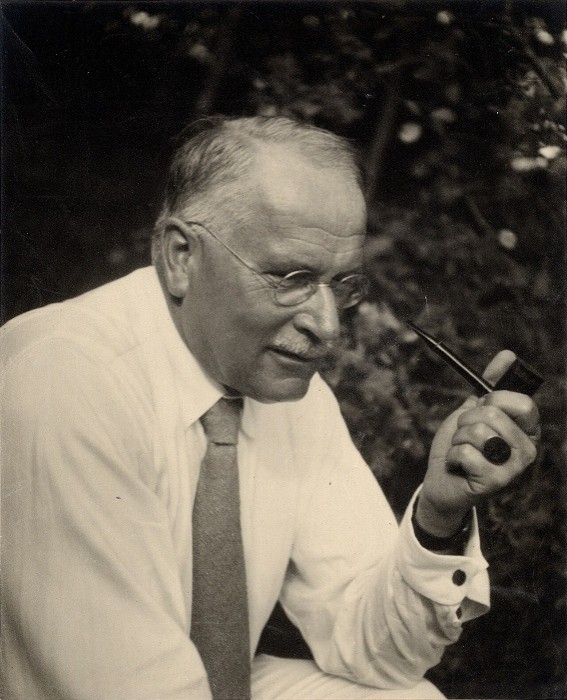
Carl Jung (1875-1961)
He was Sigmund Freud’s most celebrated pupil and he went on to further the great man’s work.
His work is used in psychology and analysis today.
Key Concepts of Synchronicity
The most famous illustration of synchronicity that comes from Carl Jung treating a highly intelligent, intensely rational female patient.
Other Notable Examples of Synchronicity
Carl Jung treated paranormal and occult experiences as real psychological phenomena that deserved serious study.
His Personal Experiences
Carl Jung did not claim to "believe" in an afterlife through rigid scientific proof, but he strongly suspected it based on personal near-death visions and psychological observations. After a profound near-death experience in 1944, he wrote that the psyche is not strictly bound by space and time, concluding that some form of conscious, meaningful existence continues after bodily death.
Key Views on the Afterlife
However the “physco-bore “ in your life may say even after you explain your knowledge of Jung’s views, that Cognitive Behaviour Therapy(CBT) explains why humans believe things, however it does not make these things real. Nobody can doubt that CBT is a useful tool, in helping people who seek help, but it has its limitations.
CBT Explains the Function of Beliefs
While CBT does not study why humans overall believe in an afterlife, it looks at how an individual's personal beliefs work in their mind.
Why CBT is Not an Origin Theory
©Stephen William International Copyright.
My book which covers modern mysticism as well as Nostradamus’s , is available at only US $ 3.45 on Amazon Kindle or FREE TO READ if you are a Kindle Unlimited member. please follow this link
https://amzn.eu/d/0czjaIns
Not all mystical experiences can be definitively explained by psychology. While psychology and neuroscience can map the brain activity, triggers, and emotional patterns behind these profound moments, they cannot prove or disprove whether an objective, spiritual reality exists beyond the human mind.
The Psychological View
Psychology explains mystical states through the lens of brain function, cognitive processes, and human development:
- Brain changes: Altered states of consciousness often involve unusual activity in the parietal lobes, which normally help define the boundaries of the physical self.
- Mental health and traits: High levels of openness to experience, deep focus during meditation, or extreme stress can trigger unitive feelings.
- Evolutionary purpose: Some theorists suggest awe and spiritual connection helped early humans bond and survive together in groups. This however is merely theory and not proven.
Science can describe how an experience feels and which neurons fire, but it faces limitations in fully defining the event:
- The "How" vs. "Why": Knowing that a chemical or brain shift happens does not prove the event is only a trick of the brain.
- Real-world impact: Many people emerge from mystical moments with lasting, positive changes in character and wisdom that defy simple clinical labels.
- The Transcendent view: Philosophers and theologians argue that human minds are built to perceive a spiritual reality, meaning the brain acts like a receiver rather than the creator of the experience.
Carl Jung (1875-1961)
He was Sigmund Freud’s most celebrated pupil and he went on to further the great man’s work.
His work is used in psychology and analysis today.
Key Concepts of Synchronicity
- Acausal Principle: Events are linked by meaning rather than a traditional cause-and-effect chain.
- Inner and Outer Bridge: An external event mirrors a person's inner thoughts, dreams, or emotional state in a deeply personal way.
- Archetypal Roots: Jung believed these moments are tied to the collective unconscious and point to a deeper, underlying order in the universe.
- Scientific View vs. Theory: While Jung explored the concept alongside physicist Wolfgang Pauli, some critics and modern scientists attribute these occurrences to confirmation bias and human pattern recognition. However from my understanding they could not give a true alternative explanation to his findings.
The most famous illustration of synchronicity that comes from Carl Jung treating a highly intelligent, intensely rational female patient.
- The Inner Event: The patient was describing a detailed dream where she received a costly piece of gold jewellery shaped like a scarab beetle—an ancient symbol of rebirth and transformation.
- The Outer Event: While she spoke, Jung heard a tapping on his consulting room window, turned, and caught a real flying insect (Cetonia aurata, the common rose-chafer) that looked remarkably like a golden-green scarab beetle.]
- The Result: Jung handed the live beetle to the woman, saying, "Here is your scarab." This shock to her rigid intellectualism broke through her defences, allowing her therapy to finally progress.
Other Notable Examples of Synchronicity
- The Fish and the Course of Events: Jung described a day where the word "fish" appeared repeatedly. His patient dreamed of fish, someone showed him a picture of a fish, a fish was served for lunch, and a visitor casually mentioned a fish. None of these occurrences had a causal connection, but they clustered around the archetypal meaning of the fish symbol in a specific time frame.
- The Stolen Watch and Sudden Recall: In his writings, Jung noted instances where a person thinks intensely about an acquaintance or object out of the blue, only to encounter that exact person or object seconds later, carrying a deep emotional resonance that distinguishes it from random static or probability.
- The I Ching and Divination: Jung experimented with the ancient Chinese practice of I Ching, viewing the layout of coins or yarrow stalks not as magic, but as a method to capture a moment in time where the inner psychological state of the questioner mirrors the outer physical layout of the oracle.
Carl Jung treated paranormal and occult experiences as real psychological phenomena that deserved serious study.
His Personal Experiences
- Grew up in a family with a strong interest in spiritualism and supernatural stories.
- Claimed to experience uncanny events throughout his life, including prophetic dreams and unexplained noises.
- Wrote his medical student doctoral thesis on the psychology and pathology of seemingly occult phenomena.
- Interpreted ghosts, spirits, and visions as projections of the collective unconscious (a shared layer of the human mind filled with universal ancestral symbols and instincts).
- Emphasized the "psychological reality" of these experiences, meaning that whether a vision existed outside the mind or not, its impact on human behaviour and emotion was undeniably real.
- He developed the concept of synchronicity, meaning meaningful coincidences that cannot be explained by cause and effect.
- He also rejected pure materialist science as too narrow but stopped short of endorsing literal magic or conventional religious dogma.
- Maintained that the universe holds deep mysteries that human logic and modern science cannot yet measure, if ever.
Carl Jung did not claim to "believe" in an afterlife through rigid scientific proof, but he strongly suspected it based on personal near-death visions and psychological observations. After a profound near-death experience in 1944, he wrote that the psyche is not strictly bound by space and time, concluding that some form of conscious, meaningful existence continues after bodily death.
Key Views on the Afterlife
- Beyond Space and Time: Jung argued that parts of the human psyche function outside of physical limits, pointing to dreams and visions as proof that the mind is not confined to the physical body.
- The Near-Death Shift: Following his 1944 heart attack and visions, his perspective shifted from academic agnosticism to a deep conviction that "what happens after death is so unspeakably glorious".
- Intellect vs. Emotion: Jung maintained that while the intellect sees the afterlife as unprovable speculation, the emotional and symbolic value of an afterlife is vital for a complete human life.
However the “physco-bore “ in your life may say even after you explain your knowledge of Jung’s views, that Cognitive Behaviour Therapy(CBT) explains why humans believe things, however it does not make these things real. Nobody can doubt that CBT is a useful tool, in helping people who seek help, but it has its limitations.
CBT Explains the Function of Beliefs
While CBT does not study why humans overall believe in an afterlife, it looks at how an individual's personal beliefs work in their mind.
- Core Beliefs: These are deep, foundational ideas you hold about yourself and the world. An afterlife belief often acts as a core belief.
- Coping Mechanisms: Beliefs can reduce emotional pain. Believing in an afterlife can lower the fear of dying or losing a loved one.
- Emotional Regulation: Thinking that a deceased relative is at peace changes a person's sadness into comfort.
- Behavioural Guidance: Beliefs guide daily choices. A person might act kindly or follow moral rules because they believe the afterlife holds a reward or punishment.
Why CBT is Not an Origin Theory
- Clinical Focus: CBT treats mental health issues in the present moment.
- Not History: It does not study human evolution, culture, or why religions start.
©Stephen William International Copyright.
My book which covers modern mysticism as well as Nostradamus’s , is available at only US $ 3.45 on Amazon Kindle or FREE TO READ if you are a Kindle Unlimited member. please follow this link
https://amzn.eu/d/0czjaIns
