


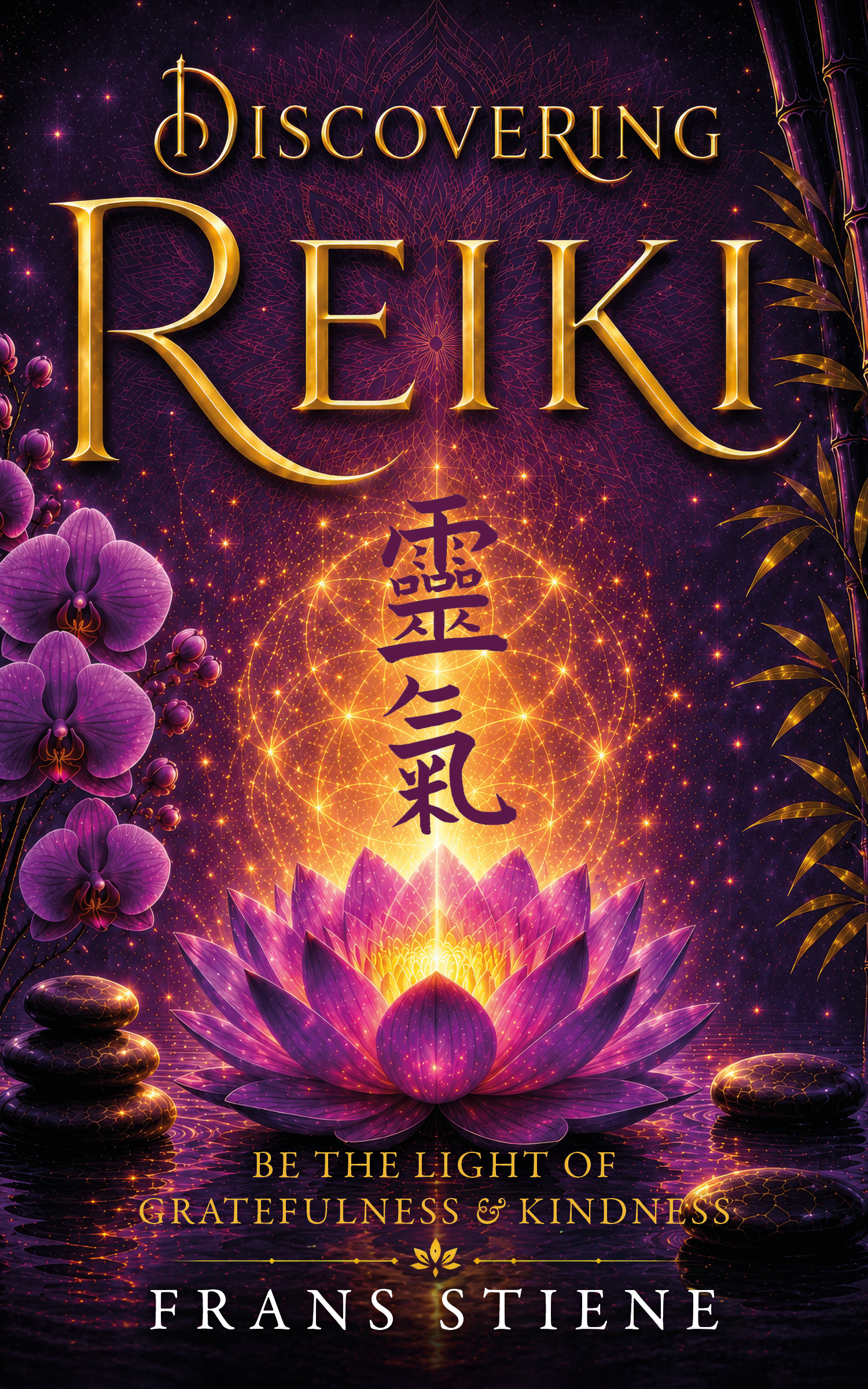
Discovering Reiki: Be The Light of Gratitude and Kindness
by Frans Stiene (https://www.Alleycathouse.com)
by Frans Stiene (https://www.Alleycathouse.com)
In the new book, Discovering Reiki, international teacher and author Frans Stiene offers an accessible introduction rooted in the Japanese origins of the practice.
There are days when even a small irritation can feel like one demand too many. A delayed journey, an unanswered message, a conversation that stays with us long after it has ended. We carry these moments into the evening, often without noticing how tightly we are holding them.
The wish to respond differently brings many people to spiritual practice. We want room to breathe, a steadier relationship with ourselves and a little more patience for the people we love. Reiki may enter our lives through a recommendation, a treatment or simple curiosity. Knowing where to begin can be harder.
In Discovering Reiki, international teacher and author Frans Stiene offers an accessible introduction rooted in the Japanese origins of the practice. His invitation is warm and practical: begin where you are, explore through experience and allow what you learn to find its way into ordinary life.
Returning to the roots
Developed by Mikao Usui in Japan in the early twentieth century, the system of Reiki is widely associated with practitioners placing their hands on or near the body. Yet this familiar image represents only part of its teachings.
Stiene approaches Reiki as a path of spiritual development encompassing meditation, ethical principles, hands-on and hands-off practice, symbols, mantras and the teaching ritual known as reiju. These elements belong together, each contributing to the practitioner’s understanding.
At the heart of his approach is the idea that we already possess the qualities we are seeking. Kindness, openness and the capacity to be present can become obscured by worry, anger and habitual reactions. Practice helps us recognise and express them more fully.
For a newcomer, this offers an encouraging starting point. There is space to explore without feeling that spiritual understanding belongs to somebody more gifted or further along the path.
A teacher who keeps learning
Stiene’s writing draws on extensive teaching experience and an enduring interest in the roots of Usui’s system. His research and training have taken him to Japan, and he continues his own spiritual practice alongside his work with students around the world.
His books include The Inner Heart of Reiki, Reiki Insights and The Way of Reiki. Readers meeting him for the first time through Discovering Reiki encounter a teacher who translates demanding ideas into recognisable human experiences.
Everyday comparisons give the material a welcoming quality. The emphasis falls on what we can explore for ourselves: how we breathe, where our attention goes and how we behave when circumstances become uncomfortable.
That approach matters. A beginner needs enough explanation to feel oriented, together with permission to learn gradually. Stiene provides a framework while repeatedly bringing the reader back to personal practice.
Beginning with curiosity
A first encounter with Reiki can raise understandable questions. Must we already meditate? Do we need a particular belief system? What if we feel nothing unusual?
Such concerns can make a simple beginning seem unnecessarily daunting. Reading an introductory guide offers time to become familiar with the language, consider the teachings and notice which questions arise.
Stiene encourages direct exploration. The reader can approach an exercise with curiosity, observe their experience and return to it another day. There is no need to turn each moment into a verdict on whether they are doing well.
This makes Discovering Reiki particularly approachable for people who feel drawn towards spiritual practice but hesitate at unfamiliar terminology or expectations.
Understanding the whole practice
The book’s organisation gives newcomers a clear route through the subject. After introducing Reiki, Stiene explores the precepts, hands-on and hands-off healing, meditation practices, symbols and mantras, and attunement, reiju and initiation.
Terms that might initially sound mysterious receive their own space and explanation. Readers can build an understanding of how the different aspects relate, rather than encountering a collection of disconnected techniques.
The precepts provide an especially useful foundation. Their concerns include anger, worry, gratitude, honesty in our way of living and kindness towards others.
These are immediately recognisable subjects. Whatever our spiritual background, most of us know how easily worry takes over, or how a moment of anger can colour an entire afternoon. Here, the teachings meet the life we already have.
Bringing Reiki into an ordinary day
A practice becomes meaningful through repetition. Finding a quiet moment is valuable; remembering what we have learned during a difficult conversation asks something further of us.
Stiene encourages readers to carry their practice beyond a formal session. The opportunities are close at hand: listening without preparing a reply, noticing tension before responding, or bringing greater attention to an everyday task.
For someone balancing employment, caring responsibilities and household demands, this is reassuring. Spiritual development can have a place within those responsibilities.
There may be days when a longer practice is possible and others when we begin with a few attentive moments. The question is how sincerely we return, and whether that attention gradually influences the way we meet ourselves and other people.
Gratitude and kindness at the centre
Gratitude and kindness run throughout Discovering Reiki. They give the teachings a practical, human focus.
Gratitude can begin with paying closer attention. A meal prepared for us, the company of a friend, a stretch of fresh air or an unexpected moment of ease may pass unnoticed when our minds are occupied elsewhere. Recognising these things can broaden our awareness of the day.
Kindness also asks for attention. Sometimes it means offering help; sometimes it means listening patiently or allowing ourselves to rest.
On difficult days, neither quality needs to become another standard against which we judge ourselves. A small, sincere act is a beginning. Stiene’s emphasis encourages readers to let that beginning grow through practice.
From reading to experience
One strength of an accessible guide is its usefulness after the first reading. We can revisit a passage, return to an exercise and discover that something which once seemed abstract now speaks directly to an experience.
Discovering Reiki combines explanations with practical material, giving readers opportunities to explore as they learn. Its manageable structure supports both an initial introduction and a slower, more reflective reading.
Keeping the book nearby can help establish continuity. A chapter becomes something to consider over several days, with space to notice how its themes appear in daily life.
Finding a way to learn
The audiobook offers another route into these teachings. Listening may suit those who find sustained reading tiring, prefer spoken explanations or appreciate returning to a subject through sound. Passages can be revisited, paused and considered at a comfortable pace.
The accompanying online course provides a further opportunity to set aside time for learning and practice. Used alongside the book, it can help beginners give their exploration a regular place in the week.
Together, the formats offer flexibility: a written reference to keep, an audiobook to revisit and a course around which to organise study. Beginners can choose the approach that suits their circumstances and build from there.
The most useful first step may be modest: read a chapter, make time to practise and notice what follows. Over time, the teachings invite a question worth carrying into each day: how might I meet this moment with a little more gratitude and kindness?
Discovering Reiki: Be The Light of Gratitude and Kindness by Frans Stiene is available through Amazon, Audible and from https://alleycathouse.com
BOOK LINK > https://link.amazon/B065lrtqX
