


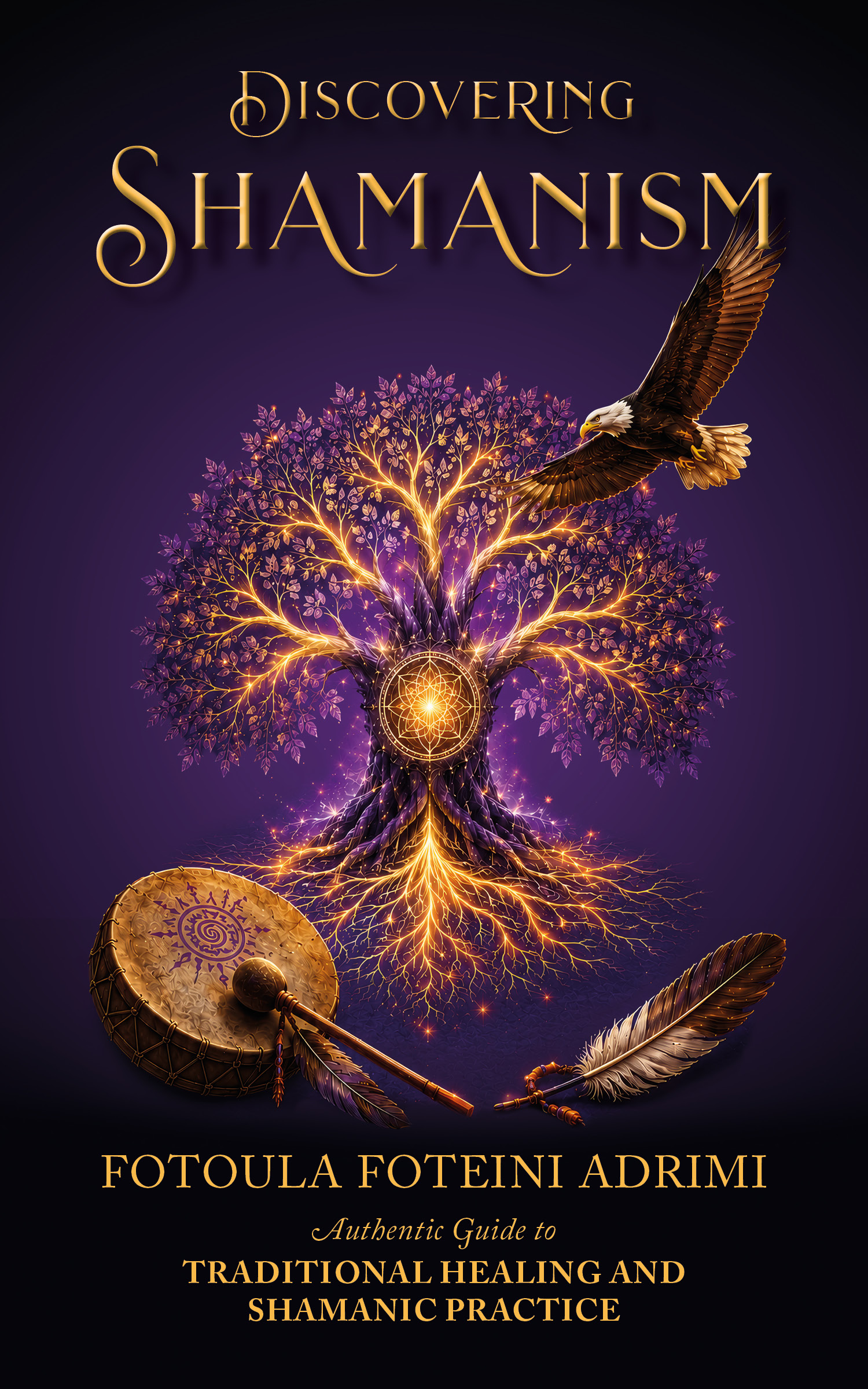
Discovering Shamanism:
An authentic guide to traditional healing and shamanic practice
By Fotoula Foteini Adrimi (https://www.alleycathouse.com)
An authentic guide to traditional healing and shamanic practice
By Fotoula Foteini Adrimi (https://www.alleycathouse.com)
From childhood rituals in Greece to a life of teaching in Scotland, Fotoula Foteini Adrimi offers beginners a thoughtful introduction to shamanic practice and a closer relationship with the living Earth.
Fotoula Foteini Adrimi’s first shamanic workshop began almost by chance. Walking through a Body and Soul fair in Glasgow in 2006, she asked her friend Jo what shamanism was. Jo mentioned indigenous spirituality and drumming. Curious, Fotoula bought a ticket.
There were no indigenous teachers at the workshop, and the drumming came from a recording. Yet when Fotoula lay down and closed her eyes, she experienced a vision that would change the direction of her life. A spirit guide, she recalls, spoke about her ancestors and showed her a future serving her community through shamanic practice.
For someone who had spent years pursuing a conventional career, it was an unexpected turning point. She had studied at university and worked as an environmental planner. Spiritual experiences belonged largely to childhood, when she had felt able to hear, see and communicate with spirits. The workshop brought that earlier sensitivity back into focus.
Twenty years later, her book, Discovering Shamanism: An Authentic Guide to Traditional Healing and Shamanic Practice, draws on the training, relationships and experience that followed. Written for readers approaching the subject for the first time, as well as those experienced practitioners who wish to revisit fundamental principles and ceremonies, it explains unfamiliar ideas while giving them practical ways to explore.
Shamanism, as Fotoula presents it, involves a relationship between human beings, the natural world and compassionate helping spirits. Practitioners enter heightened states of awareness to seek guidance and offer spiritual healing. Within this understanding, a tree, river or animal has its own spiritual presence; the Earth is alive and a spiritual ally.
Readers may recognise something of this outlook in their own experiences: the comfort of sitting beneath a familiar tree, an instinct to pause beside running water, or the sense that a landscape holds particular meaning. Fotoula gives these feelings a place within a spiritual practice, while explaining the beliefs and responsibilities that accompany it.
Her own roots reach back to Greece. Born into a family of engineers and scientists, she nevertheless witnessed older customs around her: blessings for crops, the reading of bones and rituals to remove the evil eye. Nobody explained these practices to her as a child. Only years later, after studying abroad, did she return to her family with questions about the knowledge they carried.
That return gives her story a personal warmth. Spiritual seeking can take us far from home before we recognise what was present there all along. For Fotoula, learning from her grandmother and great-aunt became part of understanding her ancestral inheritance.
Her wider education required considerable commitment. Wanting to deepen her knowledge beyond her early training, she used money from the sale of her home to study with Western and indigenous teachers. In America, she trained with Sandra Ingerman, completing her two-year shamanic teacher training in 2013. She later assisted Ingerman on an advanced course in 2024.
Through Meredith Little and the School of Lost Borders, Fotoula experienced vision quests and medicine walks, eventually becoming a facilitator herself. Her studies also brought her into the Yungdrung Bön tradition and took her to Tibet. She has continued learning Himalayan shamanism with Bhola Nath Banstola, who contributes the book’s foreword.
These experiences matter because beginners need more than enthusiasm from a teacher. They need someone who understands uncertainty, recognises the limits of introductory practice and can explain why preparation matters. Fotoula’s account includes questions and misgivings about her early training. She knows that newcomers may struggle to judge the quality of what they are being taught.
Her book therefore begins with foundations. Before introducing readers to journeying, it explores preparation, intention and sacred space. In practical terms, this means setting aside ordinary distractions and approaching the work with care. A temporary altar is sufficient for someone beginning at home; the emphasis falls on attention and relationship.
The guidance includes arranging an altar, welcoming the elements and understanding the roles of the drum, rattle and voice. These instructions make ceremony easier to picture. Readers can see how familiar objects acquire meaning through their use, and how a deliberate pause can help them approach spiritual practice with greater presence.
Fotoula also addresses circumstances that could otherwise discourage a beginner. When smoke is unsuitable, for example, she describes working with unlit herbs and calling upon the plant’s spirit. Her approach leaves room for the realities of practising in ordinary homes and shared spaces.
From there, readers move into building relationships with helping spirits and power animals. A power animal, in this context, is an animal spirit understood to offer guidance and protection. Fotoula treats these encounters as relationships that develop through attention and practice, rather than experiences to collect.
Discernment receives particular emphasis. Someone new to journeying may wonder whether an image is meaningful, whether they are imagining it, or whether they should feel more than they do. The book introduces principles for approaching spirit relationships carefully and encourages readers to deepen their understanding over time.
Its structure supports that gradual learning. Personal stories and case studies sit alongside guided practices, while reflections at the end of each chapter invite readers to pause. A glossary helps them return to unfamiliar terms without losing their place in the teaching. These features give the book a useful rhythm: read, explore, reflect, then continue.
The chapters on shamanic cosmology explain the medicine wheel and the Lower, Middle and Upper Worlds. Within the traditions described, these are realms encountered through journeying, each with its own associations. Fotoula introduces this spiritual geography through practices involving the Tree of Life, whose roots and branches connect the worlds.
Later chapters explore shamanic healing, including power retrieval and soul retrieval. The latter concerns the belief that overwhelming experiences can cause a loss of soul essence, which a trained practitioner seeks to restore. These teachings are presented within their spiritual framework; the book makes clear that they are not medical advice or a replacement for appropriate healthcare.
Fotoula is equally clear that reading an introductory book does not qualify someone to practise on others. Becoming a practitioner requires sustained training, guidance and responsibility. For readers seeking personal understanding, however, there is no obligation to turn their interest into a vocation.
Much of the book’s appeal lies in that freedom. Someone may wish to develop a regular ceremonial practice. Another reader may begin by spending more attentive time outdoors, reflecting on their emotions or expressing gratitude for the place where they live. Both can approach the material with sincerity.
By its final chapters, Discovering Shamanism has moved from basic preparation towards questions about spiritual identity and the experience of connection. Fotoula offers further routes for those who wish to continue, including teaching and guided practice. Yet the reader’s first step can remain simple and easy: make time, pay attention and begin learning how to listen.
For Fotoula, that listening has carried her across continents and back to her family’s stories. For a beginner, it might start much closer to home, in a quiet room or beneath a tree they have passed a hundred times.
Discovering Shamanism: An authentic guide to traditional healing and shamanic practice By Fotoula Foteini Adrimi is available on Amazon, Audible and from https://www.alleycathouse.com
BOOK LINK: https://link.amazon/B0bbJjfsr
