


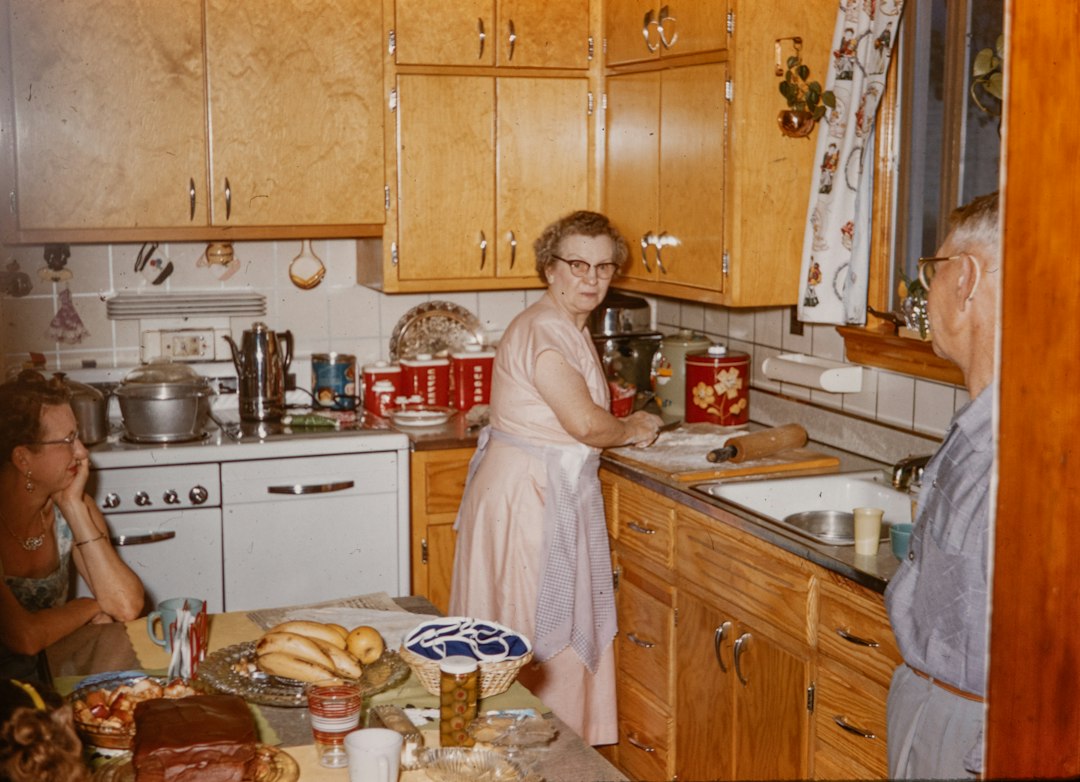
The Cost of Being Taught to be Pleasing Instead of Powerful
I’ve been reflecting on what it meant to grow up as a girl in the 1950s and 60s, and how much of what we were taught wasn’t truly education. It was conditioning. We weren’t just learning math, reading, writing, manners, sewing, cooking, or how to set a proper table. We were internalizing our assigned place in the world.
The message was everywhere, even when no one said it directly. Don’t be too loud. Don’t be too opinionated. Don’t be too smart. And definitely don’t let the boys feel you are smarter than them. As we grew older, a silent rule emerged: a girl’s intelligence could become a problem. It was okay to be capable, but not threatening. It was fine to be helpful, but not too knowledgeable. It was fine to be bright, as long as that brightness didn’t make anyone uncomfortable.
That is such a strange thing to give to a young girl. Here is your mind, but don’t use it too much. Here is your voice, but don’t let it be too loud. Here is your knowing, but don’t let it show. Here is your future, but make sure it fits inside the expectations of others.
And then we wonder where the masks came from.
For many women of my generation, the mask was not created overnight. It was built gradually. It was formed in classrooms where girls were directed toward home economics while boys were directed toward shop or leadership. It was shaped through etiquette lessons that taught us to be pleasing before we were taught to be powerful. It was developed in homes where the kitchen was presented as a woman’s natural place, as if our value was measured by how well we served, cleaned, cooked, hosted, soothed, and kept everyone else comfortable.
I want to be clear that there is nothing wrong with knowing how to cook, care for a home, raise children, or create beauty in everyday life. These are valuable skills. The issue wasn’t with the skills themselves. It was how they were presented. The problem was the message that this wasn’t just one possible path, but the expected one. The problem was that girls weren’t always asked, “Who are you?” Instead, we were asked, in some way or another, “How well can you fit?”
That was the point where the armor started.
A girl quickly learns what gets rewarded: smile, be nice, avoid correcting people, don’t embarrass a boy by knowing more, don’t seem too ambitious, don’t challenge the teacher, don’t make your father uncomfortable, don’t make your husband feel small, don’t be difficult, and don’t be too much.
So she learns to tuck parts of herself away.
She may still be intelligent, but she learns to hide it behind politeness. She may still have strong opinions, but she learns to phrase them as questions. She may still see clearly, but she learns to wait until someone else says it first. She may know exactly what needs to be done, but she learns to let a man take the lead because that’s how the room stays comfortable.
And this is where masks become armor. At first, the mask is just a way to survive. It helps us belong. It helps us avoid criticism. It helps us stay safe in a world where being female already came with limits. But over time, the mask hardens. We forget we are wearing it. We start calling it our personality. We say, “I’m just not confident.” “I don’t like speaking up.” “I’m not good with confrontation.” “I’m better behind the scenes.”
But what if some of that was never our true nature?
What if some of it was just training?
What if we weren’t born unsure of ourselves, but instead taught to question ourselves? What if we weren’t born afraid of our intelligence, but taught that it might cost us love, approval, safety, or belonging?
I see how this played out in real life. Women deferred to men even when they knew better. Women stayed silent in doctors’ offices, financial conversations, churches, workplaces, marriages, and family meetings. Women carried entire households, remembered every birthday, managed everyone’s emotions, kept families running, and still were often described as “not working” if they were not paid. They were the backbone, but rarely the authority.
And somewhere within all of that, there was a woman who knew.
She knew more than she talked about. She saw more than she let on. She kept more inside than anyone realized.
That kind of suppression affects the soul. It generates resentment, yes, but also grief. Grief for the girl who raised her hand less. Grief for the woman who apologized before speaking. Grief for the dreams that were set aside because they didn’t fit the role. Grief for the intelligence that had to sneak out sideways, managing everyone else’s lives instead of fully claiming her own.
This is why removing the mask isn’t just about gaining confidence. It’s about being honest about what happened. It’s about realizing that some of what we called humility was actually suppression. Some of what we called being nice was really fear. And some of what we called being a good girl was actually self-abandonment.
And I believe this is one of the gifts of getting older. At some point, we start to look back and say, “Wait a minute. Who told me I had to be this small?”
Maybe we don’t want to burn the whole past down. Maybe we can honor the women who came before us and still tell the truth about what they carried. Many of our mothers and grandmothers were doing the best they could within the rules they inherited. They taught us what they believed would keep us safe. But safety is not the same as freedom.
Now, we get to ask different questions.
Where am I still pretending not to know what I know?
Where do I diminish my intelligence so someone else can stay comfortable?
Where do I wait for permission before trusting myself?
Where did I confuse being loved with being easy to manage?
These questions are important because the little girl inside us is still listening. The one who learned not to be too clever. The one who was told, directly or indirectly, that boys mattered more, men knew more, and women belonged in supporting roles.
Maybe she doesn’t need us to stay angry forever. Maybe she just needs us to stop supporting the lie.
Because her intelligence was never in question. There was never anything wrong with her voice. There was nothing wrong with her clarity.
The world might not have known how to handle a clever girl who could see through things, but that doesn’t mean she was too much. It means the world around her was too small.
And maybe now, after all these years, we finally let her take up the space she should have had all along.
Cathy J. Yuhas, RN, CEOLD
Author of:
Walking Each Other Home
Amazon: https://a.co/d/0bdiAvx5
Life Beneath the Layers
Amazon: https://a.co/d/0a5zHaG9
